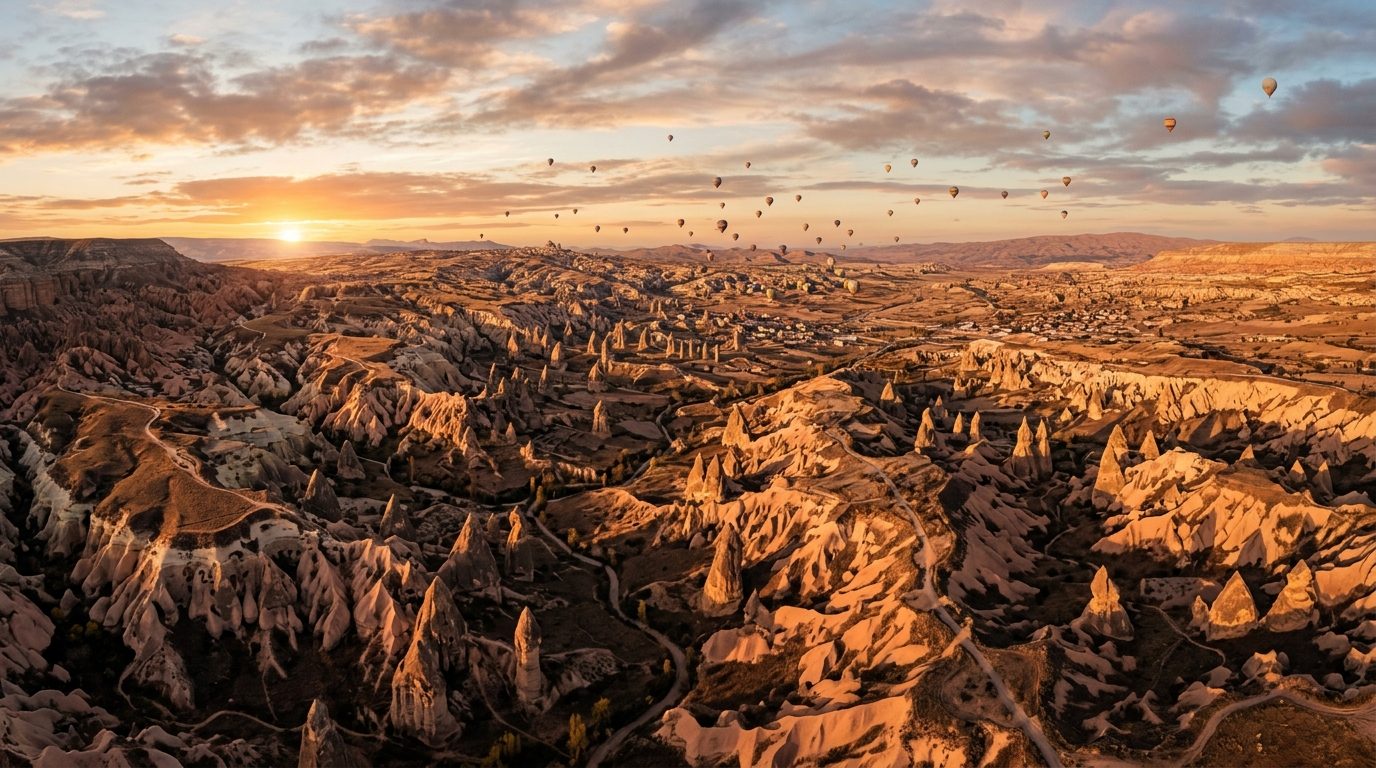
About This Project
A non-commercial initiative to document and share Turkey's most extraordinary travel routes.
Independent. Non-commercial. Written from the road.
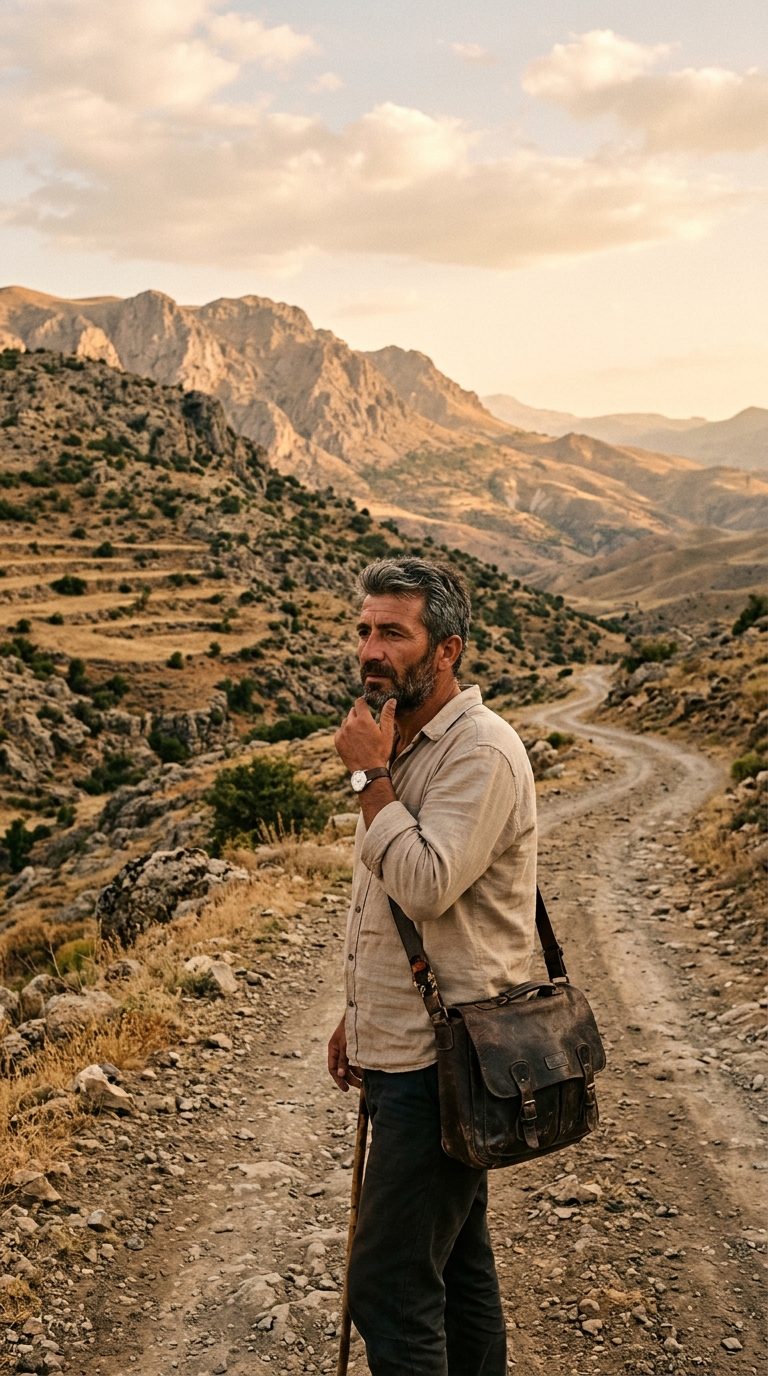
"Turkey is not one country — it is eighty-one worlds layered on top of each other, waiting to be walked through."
— Osman Ferit Aydoğan, Erzurum, 2019
81
Provinces
visited
12+
Years on
the road
340+
Routes
documented
From Ankara's Streets to Every Corner of the Republic
I was born and raised in Ankara — a city that many Turks consider a functional capital rather than a romantic one. Growing up between the concrete ministries of Kızılay and the narrow backstreets of Ulus, I developed an early restlessness, a persistent sense that Turkey's real stories were being told somewhere else entirely: on a shepherd's path in the Kaçkar Mountains, in a tea-house corner in Mardin, along the slow ferry crossing of Lake Van at dusk.
My first solo journey was modest by any measure. In 2011, aged twenty-six, I took a minibus from Ankara to Kastamonu with nothing but a notebook and a rough sketch of a road I had found in a 1970s atlas at my father's bookshelf. That single trip changed everything. Kastamonu's Ottoman timber mansions, the smell of pine resin on the Ilgaz plateau, a family in a village near Araç who invited me to stay for three nights — none of it appeared in any guidebook I had ever read. That absence felt like a problem worth dedicating years to solving.
Over the years I methodically worked through Turkey's 81 provinces — not as a challenge or a checklist, but as a slow, deliberate project of listening. Each region demanded its own rhythm: the Black Sea coast required patience and tolerance for rain; southeastern Anatolia required trust-building over many visits; the Aegean interior rewarded those willing to leave the coastal resorts and drive inland past olive groves into forgotten Byzantine towns.
The regions I have returned to most frequently are the ones that resist easy categorisation. Eastern Anatolia — Erzurum, Kars, Ağrı, Van — holds a severity and grandeur that resets your sense of scale entirely. The Kaçkars and Artvin offer an almost Georgian lushness that surprises even veteran travellers. Southeastern Turkey — Şanlıurfa, Gaziantep, Mardin, Batman — carries millennia of civilisation in its stones and its cuisine alike. The Central Anatolian highlands of Sivas, Tokat and Amasya remain among the least visited and most historically dense regions I know.
I should be honest about what this project is not. osmanferitaydogan is not sponsored. No tourism board has commissioned these routes. No hotel chain underwrites my travels. No affiliate programme shapes which accommodation I mention or which road I recommend. Every journey was funded by my own savings — from years working in urban planning research in Ankara — and every opinion expressed here is my own, unconditioned by hospitality or commercial arrangement.
This matters because the moment a route guide becomes commercially entangled, it begins to drift. Certain villages get recommended because they have accommodation that pays referral fees. Certain roads get avoided because the attractions along them are not "bookable." I have watched this happen to platforms I once admired, and I made a deliberate decision early on that osmanferitaydogan would not go in that direction — even if it meant growing more slowly and remaining permanently non-commercial.
My approach to documentation is editorial in the truest sense: I write what I find, not what I'm told to find. A route is only published here after I have driven, walked or cycled it myself, usually more than once. Notes on road conditions, seasonal access, local hospitality customs, and infrastructure realities are updated regularly. I try to write for the independent traveller who is comfortable with uncertainty, not for the one who needs everything pre-confirmed.
If there is a philosophy underlying all of this, it is simply that Turkey rewards slowness. The country is too vast, too layered, and too contradictory to be consumed quickly. Its pleasures — a simit seller at sunrise in Safranbolu, the way light falls on Urfa's limestone at midday, the silence of the Nemrut plateau before tourist buses arrive — are available to anyone willing to be patient and present. This website exists to point people toward that kind of travel. Nothing more, nothing less.
Regions Explored in Depth
Guiding Principles
What This Site Stands For
No Commercial Interests
Free from advertising, affiliates, and paid placements — always.
Every page on this site exists solely to share knowledge, not to sell anything. There are no banner ads, no sponsored recommendations, no affiliate links quietly earning commissions when you book a hotel or rent a car. No brand has ever paid to appear here, and none ever will. This independence is not a marketing angle — it is the only way to offer guidance that is genuinely trustworthy. When a road is recommended, it is because it is worth travelling. When a village is mentioned, it is because it deserves to be known. The reader's trust is the only currency that matters here.
Accuracy & Respect for the Route
Every road described has been walked, driven, or verified in person.
Turkey is a country of extraordinary geographic and historical complexity, and it changes quickly — roads are rerouted, sites close for restoration, ferries shift their schedules with the seasons. No route on this site is published on the basis of secondary sources alone. Every itinerary described has been experienced first-hand: on foot through mountain passes, behind the wheel on coastal roads at dawn, on slow regional buses across the Anatolian plateau. Where a detail could not be personally verified, it is clearly stated. Distances, timings, and conditions are updated whenever possible, because a guide that misleads is worse than no guide at all.
Cultural Sensitivity
Written with deep respect for people, heritage, and the living landscape.
Turkey is not a backdrop for adventure tourism — it is home to tens of millions of people, to ancient communities still tending their olive groves and fishing their same coves, to sacred sites that predate recorded history. Every itinerary here is shaped by that awareness. Local customs are noted not as curiosities but as courtesies. Fragile natural environments are flagged honestly, including when a place may not benefit from more visitors. The goal is never to chase footfall or celebrate discovery for its own sake. It is to help travellers move through Turkey in a way that is generous — to the landscape, to the communities they pass through, and to the country itself.
"These principles are not aspirations — they are the conditions under which this project exists. Without them, there would be no reason to publish anything at all."
— osmanferitaydogan
osmanferitaydogan
Discover Turkey through roads less travelled — independent guides crafted from lived experience across Anatolia's most compelling landscapes.
© 2026 osmanferitaydogan. All rights reserved.